
For students choosing STEM summer programs in 2026, Research Science Institute (RSI) is the best fit for a research-focused student, while Summer Science Program (SSP) suits collaborative research, MITES Summer suits broader exploration, and California State Summer School for Mathematics and Science (COSMOS) suits university-based study. The right choice depends on what a student wants to do each day, not which name looks most impressive.
- Research Science Institute is the research-focused pick among these STEM summer programs; choose it for sustained research interests.
- Summer Science Program fits students who want to work on a shared science project.
- MITES Summer fits broad STEM exploration; COSMOS fits university-based academic study.
- Schooligio helps connect summer choices with course, career, and college planning; it does not run these programs.
Why this matters
A counselor with a large caseload cannot judge every student's summer choice by program name alone. One student wants to find out whether engineering interests them; another already wants to spend the summer on a research question. Those students need different shortlists, even if both search for STEM summer programs.
Schooligio is a college and career counseling platform for students in grades 8–12. It helps students plan extracurricular activities, choose courses, and explore colleges. For a counselor, the useful question is where a summer experience fits in that wider plan, not whether the program can promise a college outcome.
Schooligio is best for connecting a student's STEM summer program choice to course and college planning, not for replacing a counselor or providing the summer program itself. Counselors remain the people who can ask why a choice fits this student.
What makes the best STEM summer program?
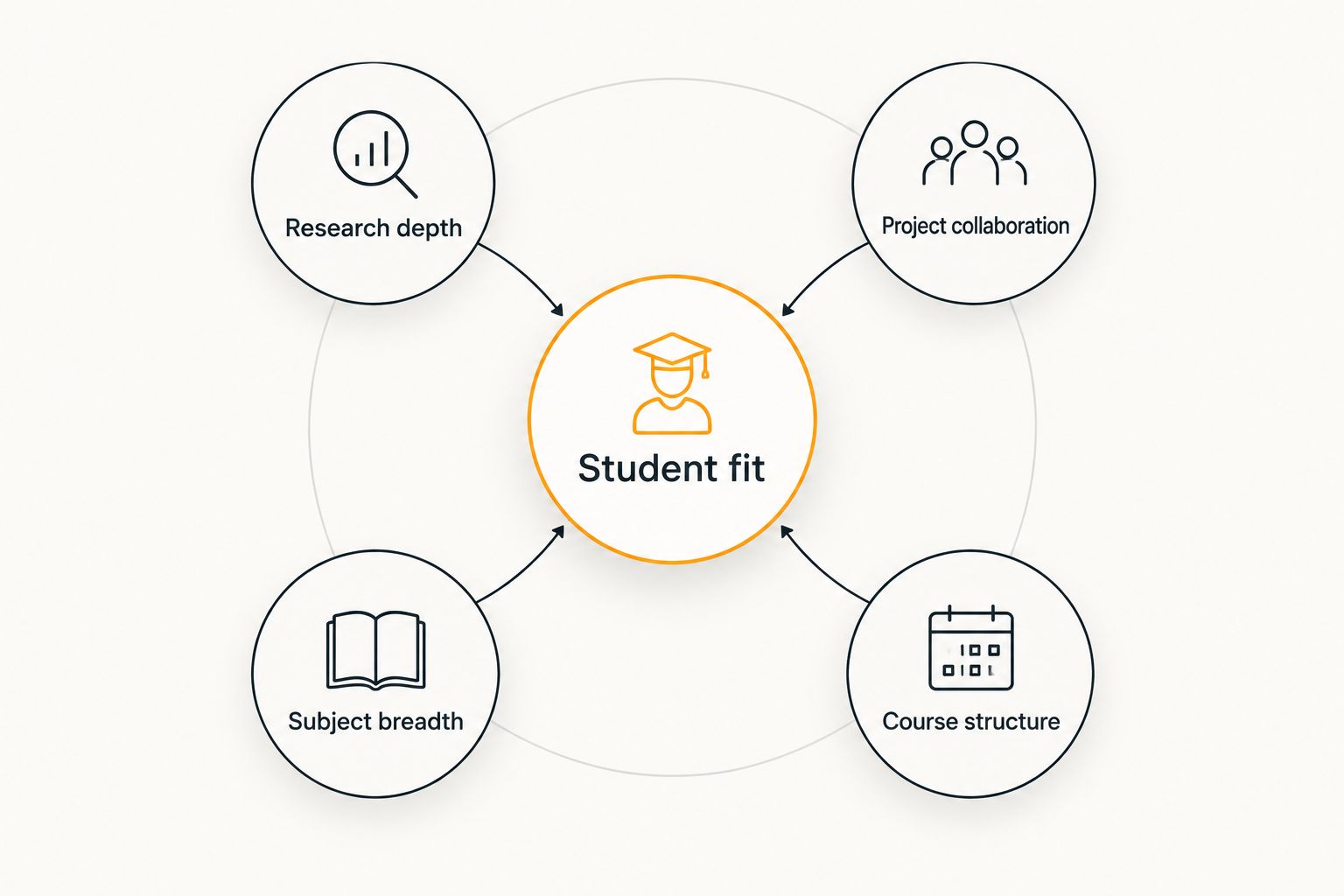
Use these 5 fit criteria before comparing program names. A program that misses a student's goal is the wrong pick, regardless of how well known it is.
- Research depth: Does the student want to investigate a focused question, or are they still testing several interests?
- Project collaboration: Would the student enjoy working toward a shared result, or do they prefer to develop an individual line of inquiry?
- Subject breadth: Does the student want exposure to different STEM fields, or more time in one area?
- Course structure: Would guided academic study suit the student better than an open-ended research project?
- Student fit: Can the student explain, in their own words, why the program's format matches what they want to learn?
These criteria separate a program's format from its reputation. Ask the student to name a subject they want to pursue, describe the kind of work they enjoy, and identify what they hope to understand by the end of summer 2026. If the answers are still broad, exploration is a sound goal; a research-intensive choice need not be the default.
For 2026 applications, confirm each program's current format, eligibility rules, deadlines, and required materials with the program itself. Those details determine whether a good conceptual fit is an actionable choice.
STEM summer programs at a glance
| Program | Best for | Standout format | Key limitation |
|---|---|---|---|
| Research Science Institute (RSI) | Students ready to focus on research | Research-centered experience | Poor fit for someone still sampling STEM subjects |
| Summer Science Program (SSP) | Students drawn to collaborative research | Team-based science project | Less suitable for someone seeking independent exploration |
| MITES Summer | Students exploring several STEM interests | Broad STEM learning | Less focused on one research question |
| California State Summer School for Mathematics and Science (COSMOS) | Students seeking university-based academic study | Subject-focused study in a university setting | Program fit depends on the subject offered |
The table is a fit guide, not an admissions ranking. A counselor can use it to narrow a student's list, then check the current 2026 program information before recommending an application.
1. Research Science Institute: best STEM summer program for focused research
Research Science Institute, commonly called RSI, is the first option to examine when a student already wants to investigate a specific STEM interest through research. Its research-centered format makes the most sense for someone who can talk about a question they want to pursue, not just a subject they enjoy in class.
RSI pros:
- Research is the central reason to choose it.
- It gives a student a clear way to test their interest in sustained inquiry.
- It fits a student who wants to discuss methods, questions, and findings with a counselor afterward.
RSI cons:
- Its research focus is a poor match for a student who wants a broad introduction to several fields.
- A student seeking mainly course-style instruction should compare other formats first.
Best for: A student with a developed research interest who wants that interest to shape their summer 2026 shortlist. Ask the student to write down the question they would explore before treating RSI as their top choice. If they cannot yet name one, that is useful guidance: look at exploration-oriented options instead.
Verdict: Buy the research-focused fit if the student wants sustained inquiry; hold if they are still deciding which STEM subjects interest them.
2. Summer Science Program: best for collaborative research
Summer Science Program centers a shared scientific project. That makes SSP a distinct choice from RSI: the appeal is not only the subject, but the chance to do demanding science with other students working toward a common result.
SSP pros:
- Team-based work gives collaborative students a clear format to seek out.
- A shared project provides a specific experience to discuss after the summer.
- Its science focus helps students compare it with broader STEM exploration.
SSP cons:
- It is a weaker fit for a student who wants to set an entirely individual research direction.
- A student who has not chosen a scientific area to explore should compare broader options.
Best for: A student who enjoys working through a scientific problem with peers and wants a project, rather than a survey of unrelated topics, to organize the summer. In a counseling conversation, ask what role the student likes to take on a team. Their answer matters more than whether they recognize the program name.
For 2026, check the current project areas before suggesting SSP to a student interested in a particular field. A collaborative format is valuable only when the available subject also fits.
Verdict: Buy the team-project fit for a student who wants collaborative science; hold if independent inquiry is the priority.
3. MITES Summer: best for broad STEM exploration
MITES Summer is the strongest match in this list for a student who wants to explore STEM without forcing an early commitment to one research question. Its broader academic emphasis gives a counselor a different recommendation to make when a student is curious and motivated but still sorting through possible directions.
MITES Summer pros:
- Broad exploration matches students comparing STEM interests.
- It creates room to think about academic direction, not just a single project.
- It offers a useful contrast to research-first programs on a shortlist.
MITES Summer cons:
- Breadth is a limitation for a student whose main goal is to pursue one focused research question.
- A student seeking a particular subject should confirm that the current program experience matches that interest.
Best for: A student who can name several STEM interests but is not ready to choose just one. Have the student describe what they hope to learn about themselves as well as the subjects. That gives the counselor a way to discuss the choice without treating uncertainty as a weakness.
Check the 2026 program description and application requirements directly. Do not assume that a familiar program name tells you exactly what this year's experience includes.
Verdict: Buy the exploration fit when breadth is the student's goal; hold if they want a narrowly defined research project.
4. COSMOS: best for university-based academic study
California State Summer School for Mathematics and Science, or COSMOS, is the option to examine when a student wants subject-focused STEM study in a university setting. Rather than start with the institution's name, start with the academic area the student wants to study.
COSMOS pros:
- Its academic focus suits a student who enjoys learning a subject in depth.
- The university setting gives students a distinct format to compare with research programs.
- Subject choice creates a practical starting point for a counselor conversation.
COSMOS cons:
- The fit depends on the available subject, not the program name alone.
- A student whose main goal is to direct an independent research question should compare RSI first.
Best for: A student ready to identify a STEM subject they want to study more closely. Ask them what they have enjoyed in their current courses and what they want to investigate next. Then compare that answer with the current 2026 COSMOS offerings before adding it to the shortlist.
A university setting is not, by itself, a reason to choose a summer program. The subject and learning format have to serve the student.
Verdict: Buy the subject-study fit when a current offering matches the student's interests; wait if the subject match is unclear.
How these programs were ranked
This ranking follows the 5 fit criteria above: research depth, project collaboration, subject breadth, course structure, and student fit. RSI leads for a student seeking focused research. SSP takes the collaborative-research slot; MITES Summer takes broad exploration; COSMOS takes university-based subject study. Each program has a different job on the shortlist.
It is not a ranking of selectivity, college admissions value, or likely student outcomes. None of those measures establishes which summer experience is right for an individual student. For 2026, use the ranking to decide which program to investigate first, then verify current details before a student acts.
Which STEM summer program should you choose?
Choose RSI by default only when the student already wants focused research. Choose SSP instead when the work they most want is a shared science project. Choose MITES Summer when the real goal is to explore several interests, and choose COSMOS when a current subject offering matches a student who wants university-based study.
If none fits, do not force a famous name onto the student's summer. A student can identify the kind of experience they want first, then look for a program that provides it. That is a stronger counseling conversation than asking which application would look best.
For counselors supporting many students, keep the next step small: ask each student to identify 1 learning goal, 1 preferred format, and 1 reason the program fits. These are prompts for a discussion, not claims about what a program will deliver. Schooligio can help students place extracurricular plans alongside their course, career, and college planning; the counselor supplies the judgment about fit.
FAQ
What are the best STEM summer programs for high schoolers in 2026?
Research Science Institute is the research-focused pick, Summer Science Program fits collaborative research, MITES Summer fits broad exploration, and COSMOS fits university-based study. The best choice depends on the student’s learning goal and the current program details.
Is RSI better than Summer Science Program?
RSI is the better fit for a student seeking focused research; Summer Science Program is the better fit for one drawn to a shared science project. Compare how the student wants to work before choosing.
Which STEM summer program suits a student who has not picked a major?
MITES Summer is the broad-exploration choice in this list. A student still comparing STEM interests should not be pushed into a narrow research goal simply to make a summer plan.
Is COSMOS a research program or a course-based option?
COSMOS is the university-based, subject-focused academic option in this comparison. Check the current offerings to see whether the available subject fits the student.
How should counselors compare STEM summer programs?
Compare research depth, collaboration, subject breadth, course structure, and student fit. Ask students what they want to learn and how they prefer to work before reviewing program details.
Does Schooligio run STEM summer programs?
No. Schooligio is a college and career counseling platform that helps students plan extracurricular activities, courses, and colleges; it is not one of the summer programs listed here.
What should a student check before applying for a 2026 STEM summer program?
Check the program’s current eligibility rules, format, deadlines, required materials, and subject offerings. A good match on paper is useful only if the current program fits the student’s plans.
One last thing
A student who cannot yet name a research question is not behind. For summer 2026, choosing exploration over a research-first program can be the more precise decision. Ask what the student wants to understand by the end of the experience, then let that answer shape the shortlist.
Related guides