
Best overall for a student seeking college credit: Harvard Secondary School Program. Best for discussion: Yale Young Global Scholars. Best for exploring a subject: Brown Pre-College Programs. Best for sustained research: Research Science Institute at MIT. These summer programs at colleges for high schoolers serve different goals, so the right 2026 choice starts with what a student wants to learn—not a campus name.
- Harvard Secondary School Program is the best fit here for a high schooler seeking college credit in 2026.
- Yale Young Global Scholars suits discussion; Brown Pre-College Programs suits subject exploration.
- Research Science Institute at MIT suits students ready to focus on research, not sample several subjects.
- Choose summer programs at colleges for high schoolers by learning goal, credit status and access requirements.
Why this matters
A counselor with a large caseload cannot build an individual summer plan around every appealing program name. The useful first question is what each student wants the summer to change: their knowledge of a subject, their experience with college-level work, or their understanding of research.
That question also gives families a way to assess a program without treating admission to it as an admissions outcome. Schooligio brings course, career and college planning into one place for students in grades 8–12. For counselors, it is a planning support—not a substitute for the conversation that identifies a student's interests and circumstances.
This guide compares four established programs by purpose. It does not treat a place in any program as proof of future college admission. Check each program's own 2026 information before advising a student on eligibility, dates, format or whether a particular offering carries credit.
What makes the best college summer program?
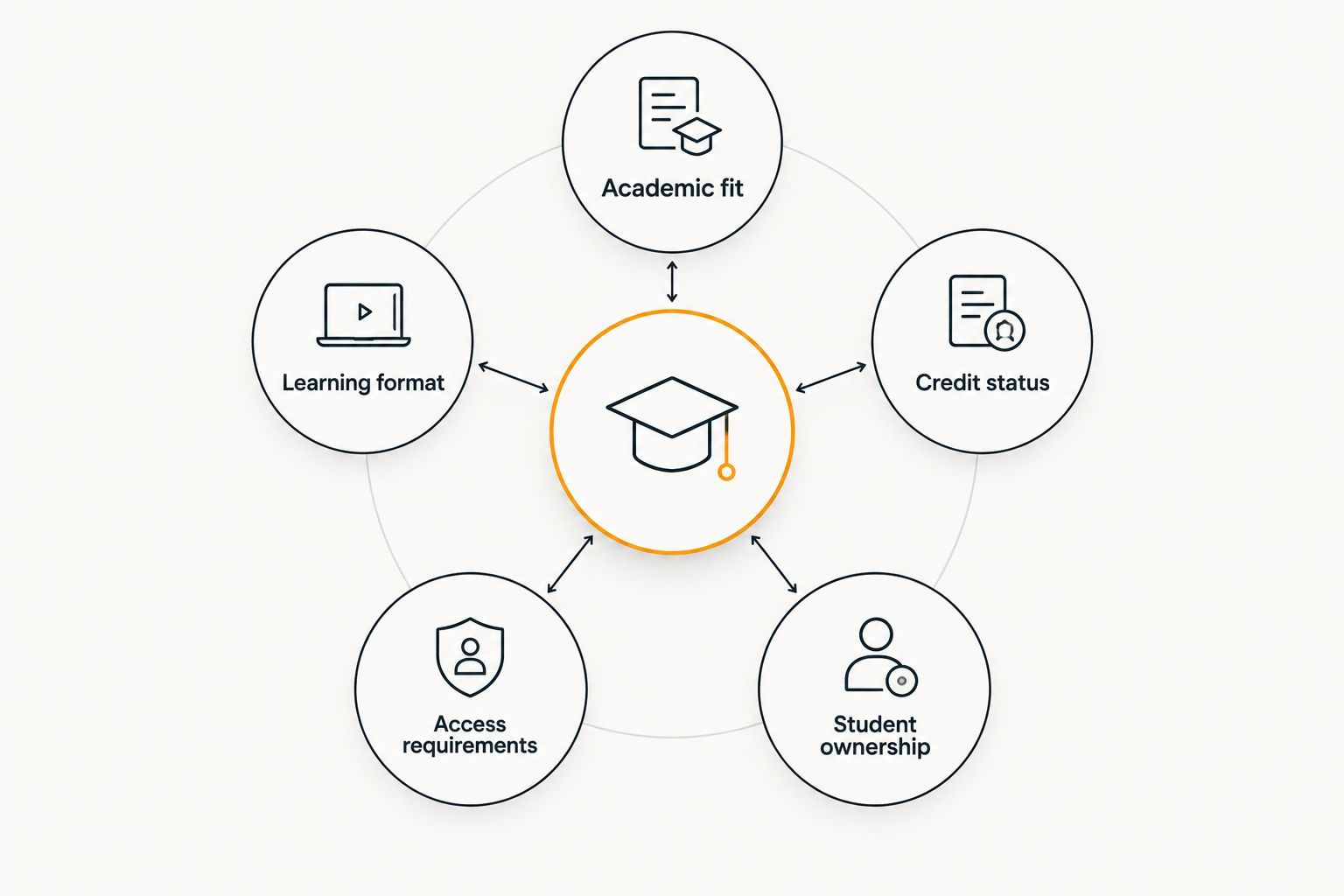
Use these criteria before comparing campus names. They make a shortlist easier to explain to a student and easier to revisit when plans change.
- Academic fit: Does the subject connect to a question the student already cares about? A program should deepen an interest or give the student a deliberate chance to test one.
- Learning format: Is the student looking for a course, discussion-led learning, broad exploration or a research project? These are different experiences, even when they take place at a college.
- Credit status: Is earning college credit the goal? Do not assume every college-hosted summer experience awards it. Confirm the terms for the specific 2026 offering.
- Access requirements: Check the published eligibility rules, application materials and participation requirements before a student invests time in an application. Requirements can differ across programs and offerings.
- Student ownership: Can the student explain why this program fits their interests in their own words? A convincing reason is more useful for planning than a recognizable college name.
A counselor can turn these criteria into a short conversation: ask the student to name the subject, describe the kind of work they want to try, and identify what would make the experience worthwhile even if no college ever asked about it. That answer is the basis for the ranking below.
Summer programs at colleges for high schoolers at a glance
| Program | Best for | Standout feature | Key limitation |
|---|---|---|---|
| Harvard Secondary School Program | College-credit study | College courses for high school students | A course commitment is not the same as a research experience |
| Yale Young Global Scholars | Discussion across perspectives | Seminar-style academic exploration | Not the pick when college credit is the main goal |
| Brown Pre-College Programs | Exploring a subject | A range of pre-college subject choices | The program name alone does not establish college credit |
| Research Science Institute at MIT | Focused research | Research-centered summer experience | Poor fit for a student who wants to sample unrelated subjects |
The default is Harvard Secondary School Program only when college credit is the student's stated goal. For a student still choosing between subjects, Brown Pre-College Programs is the more useful starting point; a research-focused student should look first at Research Science Institute at MIT.
1. Harvard Secondary School Program: best for college credit
Harvard Secondary School Program gives high school students a route into college coursework. It belongs first on this list for a student who specifically wants to take a college course, rather than attend a general enrichment program.
The distinction matters in a counseling meeting. A student interested in a subject does not automatically need a for-credit course; a student ready to commit to one should understand the academic work involved. Ask them to identify the subject they want to study and why a course is the right format. Then review the specific 2026 course and program terms together.
Harvard Secondary School Program pros:
- College coursework directly matches a credit-focused learning goal.
- A defined course gives the student a subject to investigate before applying.
- The format makes it easier to discuss readiness for sustained academic work.
Harvard Secondary School Program cons:
- It is not a substitute for a dedicated research program.
- Students seeking a low-commitment introduction to several subjects need a different format.
- Credit details must be checked for the student's specific course and circumstances.
Best for: A high schooler who can explain why college coursework fits their current interests and is prepared to examine the course requirements.
Verdict: Buy into the course-first approach if credit and the subject both matter to the student. Hold if the attraction is mainly the Harvard name; start with the learning goal instead. Schooligio can help a student connect that choice to course and college planning, while the counselor assesses whether it makes sense for the individual.
2. Yale Young Global Scholars: best for discussion
Yale Young Global Scholars is an academic summer program built around exploring ideas with other students. It is a stronger match for a high schooler who wants discussion across perspectives than for one whose first priority is college credit.
Ask the student what question they want to debate or investigate. If they can name one and want to hear how other students approach it, a discussion-led setting has a clear purpose. If they mainly want a transcripted college course, compare the credit terms of course-based programs instead.
Yale Young Global Scholars pros:
- Discussion gives students room to examine an idea from more than one perspective.
- A focused topic can help a student test an academic interest.
- The format suits students who want to learn with peers, not just complete coursework independently.
Yale Young Global Scholars cons:
- It is not the default choice for a credit-first plan.
- A student who wants an individual research project needs to compare research programs instead.
- Participation rules and available offerings require a fresh check for 2026.
Best for: A student who enjoys asking questions, discussing ideas and reconsidering an initial opinion.
Verdict: Buy into the discussion-first approach when conversation is part of the learning goal. Hold if the student cannot name a topic that genuinely interests them. For a counselor, the student's reason for applying matters more than a polished description of the institution.
3. Brown Pre-College Programs: best for exploring a subject
Brown Pre-College Programs offer high school students opportunities to study subjects in a pre-college setting. They fit a student who wants to examine an interest before deciding whether to pursue it more deeply through school courses or other activities.
Exploration still needs a purpose. A student might want to compare an emerging interest with one they already know well, or find out whether they enjoy studying a topic in a structured course. Have them explain the question they hope the experience will answer. That turns a broad program search into a choice they can own.
Brown Pre-College Programs pros:
- Subject choice supports students who are still shaping an academic direction.
- A course gives an interest a more concrete test than browsing a list of majors.
- The experience can inform later conversations about school courses and extracurricular activities.
Brown Pre-College Programs cons:
- A pre-college course should not be assumed to carry college credit.
- A broad menu can distract a student who has not set a selection criterion.
- A student seeking sustained research needs a more research-centered option.
Best for: A high schooler with a subject to test, but without a fixed decision about a college major or career.
Verdict: Buy into the exploration-first approach if the student can name what they hope to find out. Hold if the plan is only to attend a program at a familiar college. Schooligio's course and career planning capabilities can help frame the next conversation; the counselor should still help the student interpret what they learn.
4. Research Science Institute at MIT: best for focused research
Research Science Institute, or RSI, is a research-centered summer program held at MIT. It is the clearest fit in this group for a student who wants research to be the main activity, rather than one component of a broader summer experience.
A counselor should separate an interest in science from an interest in doing research. The latter asks a student to stay with a question, work through uncertainty and pay attention to how an answer is developed. If the student would rather try several subjects, a subject-exploration program is a better match.
Research Science Institute pros:
- Research is the central reason to consider the program.
- It suits a student who wants to investigate a question in depth.
- Its purpose is distinct from taking a general college course.
Research Science Institute cons:
- It is a poor fit for broad subject sampling.
- A student primarily seeking college course credit should compare course-based options.
- Applicants need to review the current 2026 eligibility and application instructions rather than rely on older summaries.
Best for: A student who can explain the kind of question they want to investigate and why research is the right way to pursue it.
Verdict: Buy into the research-first approach when the student wants the work itself. Skip RSI as a prestige-driven substitute for a summer plan. A counselor's role is to help the student distinguish sustained curiosity from pressure to add a recognizable name to an application.
How we ranked these programs
The order follows distinct student goals, not a claim that one college provides a universally better summer. Harvard Secondary School Program leads for credit-focused study; Yale Young Global Scholars covers discussion; Brown Pre-College Programs covers subject exploration; Research Science Institute at MIT covers research. The comparison uses academic fit, learning format, credit status, access requirements and student ownership.
That is also why Schooligio is not ranked as a college summer program. Schooligio is a college and career counseling platform for students in grades 8–12. It can support planning around courses, activities and colleges; it is not one of the college-hosted experiences being compared. Counselors remain responsible for helping students weigh personal context and verify 2026 program details.
Which college summer program should you choose?
Choose Harvard Secondary School Program for a clear college-credit goal. Choose Yale Young Global Scholars when the student wants to develop ideas through discussion. Choose Brown Pre-College Programs when they need to test a subject, or Research Science Institute at MIT when they want focused research.
If a student cannot yet choose among those goals, do not begin with applications. Ask them to describe the work they would like to do on an ordinary program day: study a course, discuss a question, explore a subject or pursue research. Use the answer to build a shortlist, then confirm the 2026 details on each program's own site.
FAQ
What are the best summer programs at colleges for high schoolers in 2026?
The best choice depends on the student’s goal: Harvard Secondary School Program for college-credit study, Yale Young Global Scholars for discussion, Brown Pre-College Programs for subject exploration, and Research Science Institute at MIT for research. Check each program’s 2026 requirements before applying.
Which college summer program is best for earning credit?
Harvard Secondary School Program is the credit-focused pick in this comparison. Confirm the terms of the specific course and how any credit would apply to the student’s plans.
Is Yale Young Global Scholars better than Brown Pre-College Programs?
Yale Young Global Scholars is the better match for a student seeking discussion across perspectives; Brown Pre-College Programs is the better match for testing a subject through a course. Neither is the best choice for every student.
Is Research Science Institute at MIT a college course?
Research Science Institute at MIT is a research-centered summer program, not the course-first option in this guide. Students whose goal is college coursework should compare course-based programs.
Do all college-hosted summer programs give college credit?
No. A program taking place at a college does not automatically award college credit. Check the credit terms for the specific 2026 offering before making it part of a student’s plan.
How should a counselor help a student choose a summer program?
Start with the student’s learning goal, then compare program format, credit status and access requirements. Ask the student to explain why the experience fits their interests rather than choosing by college name alone.
Does attending a college summer program improve admission chances?
Do not treat attendance as an admissions promise. Choose a program for the learning experience it offers, and evaluate any admissions claims against the college’s own guidance.
One last thing
The most useful summer-program question is not which college hosts it. It is what the student wants to do there on a normal day. A clear answer makes it easier to rule out a famous but mismatched option—and gives a counselor something concrete to discuss before the student applies.
Related guides